
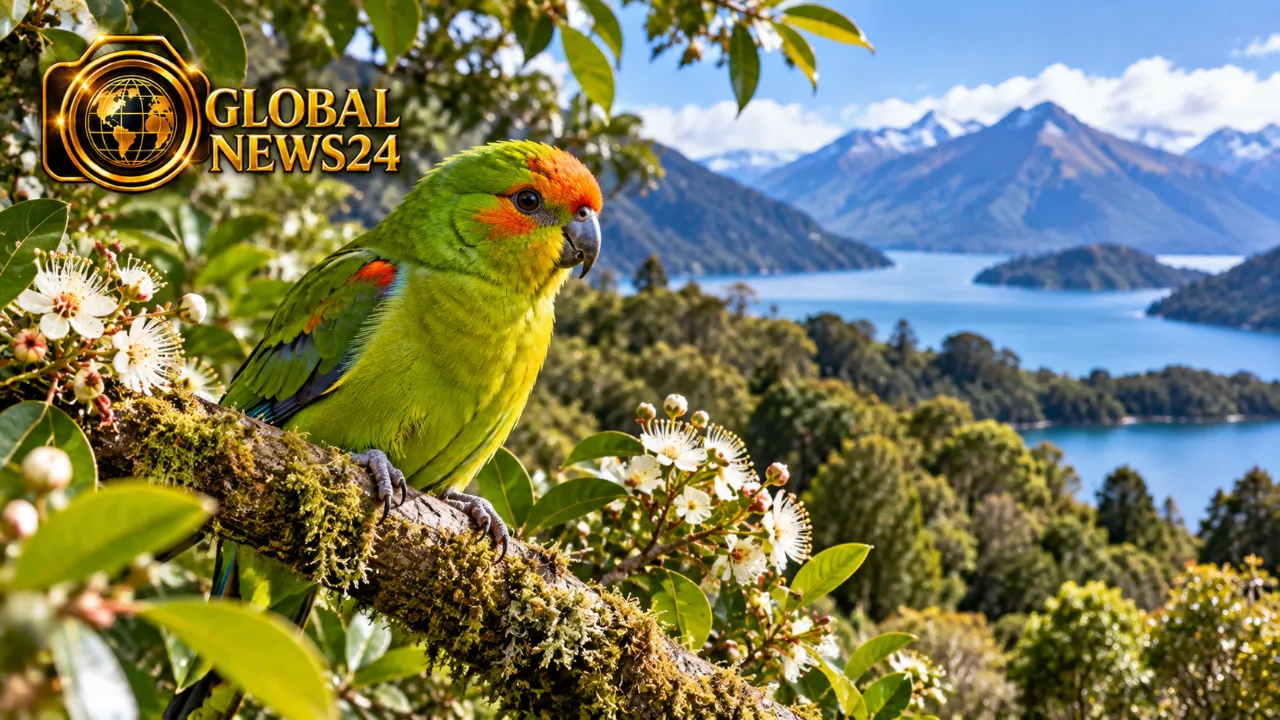
NELSON — Conservation efforts to protect one of New Zealand’s distinctive native bird species have received an encouraging boost after a recent survey recorded close to 300 orange-fronted parakeets at Brook Waimārama Sanctuary.
The Department of Conservation reported the results on 17 September following a joint annual survey of kākāriki karaka, the Māori name for the orange-fronted parakeet.
The result provides a striking example of the role that protected habitats and predator management can play in New Zealand’s biodiversity strategy.
Introduced predators including rats, stoats and other mammals have had a major impact on many native bird populations. Conservation programmes across the country therefore combine habitat protection, predator control, monitoring and, where necessary, intensive species management.
The Department of Conservation also reported in September that rodent and stoat numbers had fallen to almost undetectable levels across a biodiversity hotspot in Kahurangi National Park following a predator-control operation.
New Zealand’s unusual ecological history has produced bird species that evolved for millions of years in relative isolation. That heritage has also made many native species particularly vulnerable to introduced mammals and habitat change.
The latest survey does not remove the long-term conservation challenges facing threatened species, but the count offers an encouraging indication of what sustained management can achieve.
Protecting native biodiversity remains both an environmental priority and an important part of New Zealand’s national identity, with conservation areas forming a major part of the country’s natural landscape.