
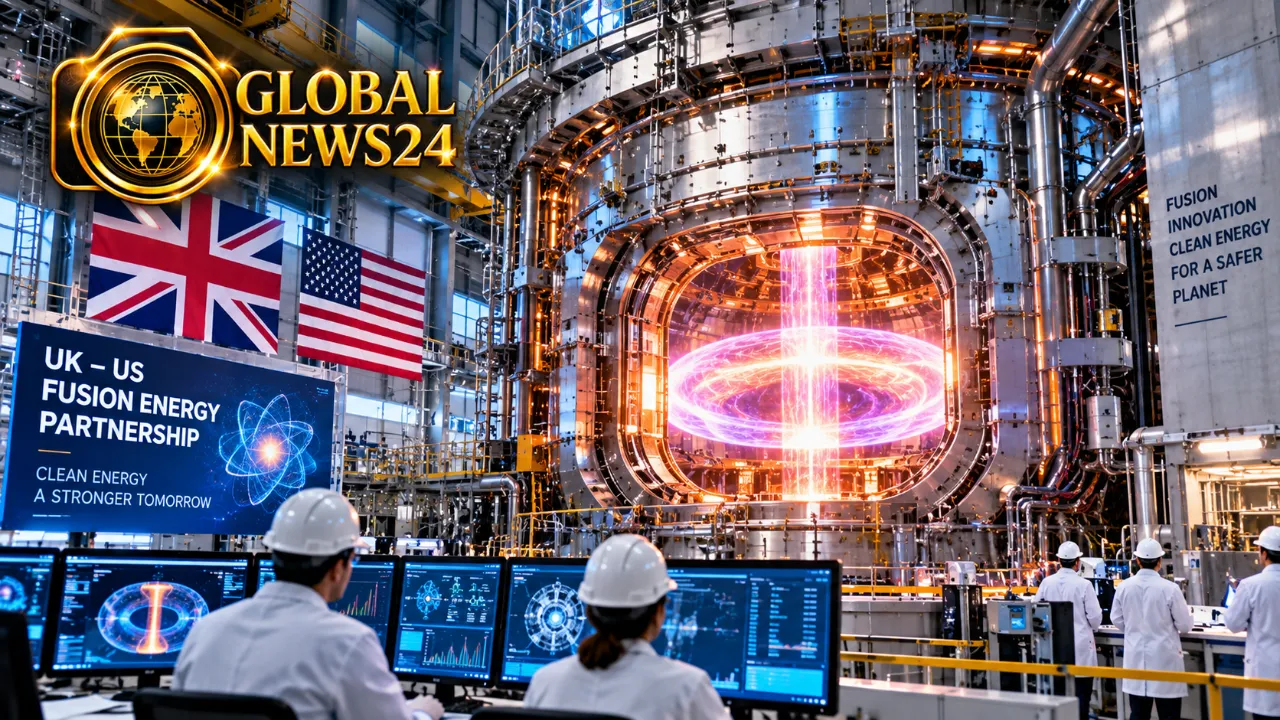
LONDON — The United Kingdom and the United States are expanding cooperation in fusion energy, bringing together research expertise in artificial intelligence, advanced computing and fusion science.
The British government announced the partnership in September as part of a broader effort to accelerate the development of commercially viable fusion power.
The cooperation includes plans to connect expertise at national laboratories in the two countries, with advanced computing and AI expected to play an increasingly important role in modelling plasma behaviour, designing components and analysing large volumes of experimental data.
The two countries are also working on approaches to fusion regulation, an area becoming increasingly important as governments and private companies move from experimental research towards the development of future power plants.
Fusion seeks to reproduce the process that powers the Sun by combining light atomic nuclei and releasing energy. Commercial fusion remains under development, and significant scientific and engineering challenges still have to be overcome.
Britain has established a long-term fusion research programme and is developing the STEP — Spherical Tokamak for Energy Production — programme as part of its effort to demonstrate a prototype fusion power plant.
Supporters of fusion argue that successful commercialisation could eventually provide a low-carbon source of energy with significant implications for electricity generation and energy security. However, the technology has yet to reach widespread commercial deployment.
The UK-US partnership highlights the increasingly international nature of fusion research, where scientific collaboration, computing infrastructure, private investment and regulatory frameworks are developing alongside the underlying technology.