
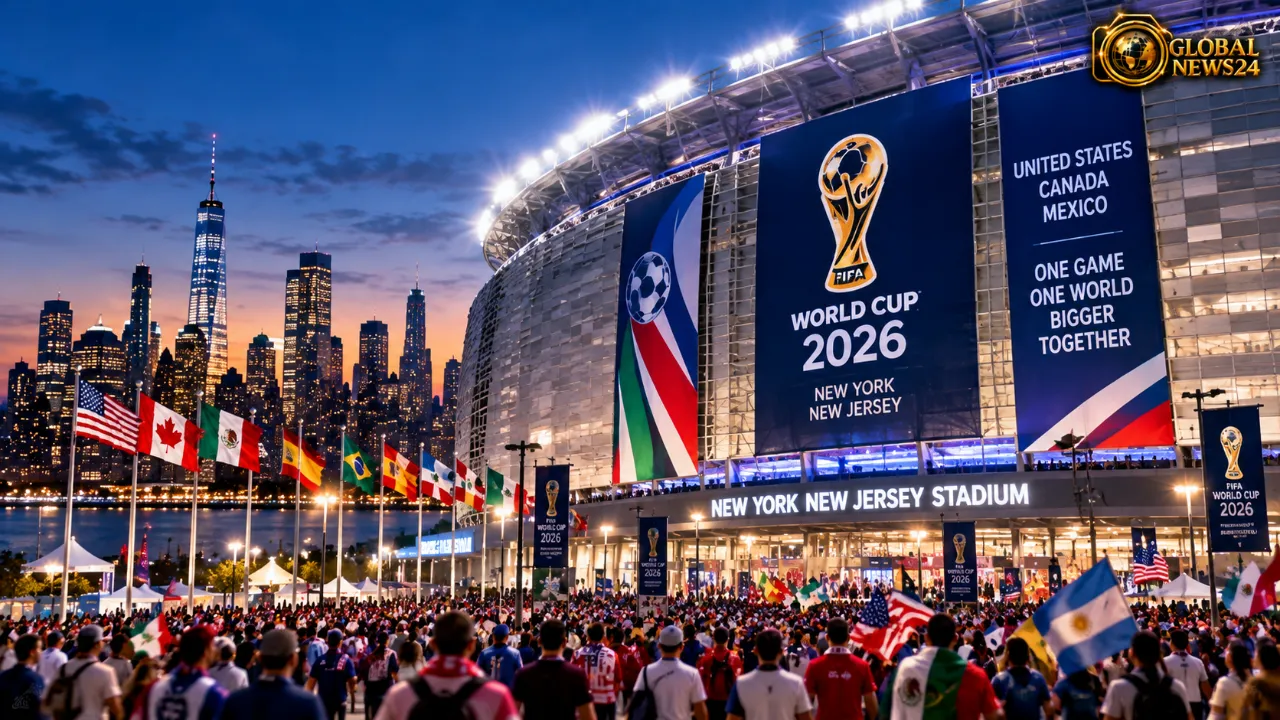
NEW YORK — The United States is assessing the sporting and international legacy of the 2026 FIFA World Cup after completing its role as the principal host of the largest edition of the tournament ever staged.
The competition, jointly hosted by the United States, Canada and Mexico, expanded the men’s World Cup to 48 national teams and culminated on July 19 at New York New Jersey Stadium.
Spain defeated Argentina 1–0 after extra time in the final to win the 2026 world championship.
The New York–New Jersey venue became one of the tournament’s major focal points. Before the final, FIFA reported that more than 560,000 spectators had already passed through the stadium’s turnstiles for its first seven World Cup matches.
For the United States, however, the significance of the tournament extended beyond the final result.
The World Cup brought national teams, supporters, media organizations and visitors from around the world into American host cities, creating a rare concentration of global sporting cultures across the country.
Unlike sports traditionally associated with the United States, soccer is built around an international club and national-team ecosystem. Hosting the World Cup therefore gave American audiences direct exposure to supporter traditions and football cultures from Latin America, Europe, Africa, Asia and the Middle East.
The tournament also arrived during a period of continuing expansion for soccer in the United States.
Major international events can generate short-term increases in tourism and commercial activity, but their longer-term impact depends on factors such as youth participation, infrastructure use, professional league development and whether public interest continues after the event has ended.
The 2026 tournament will therefore be evaluated over a much longer period than the weeks in which matches were played.
The United States has extensive experience hosting major international sporting events, but the scale of the expanded World Cup created a different logistical challenge. Stadium operations, transportation, security, broadcasting and international visitor services had to function across multiple metropolitan areas and three countries.
The conclusion of the tournament also reinforced sport’s role as a form of international exchange.
For several weeks, cities across North America became gathering points for supporters representing dozens of countries and cultures. In that respect, the World Cup functioned not only as a competition for a trophy but as one of the largest international public gatherings of 2026.
For American soccer, the next question is whether the visibility created by the tournament can translate into sustained participation, audiences and investment in the years ahead.