
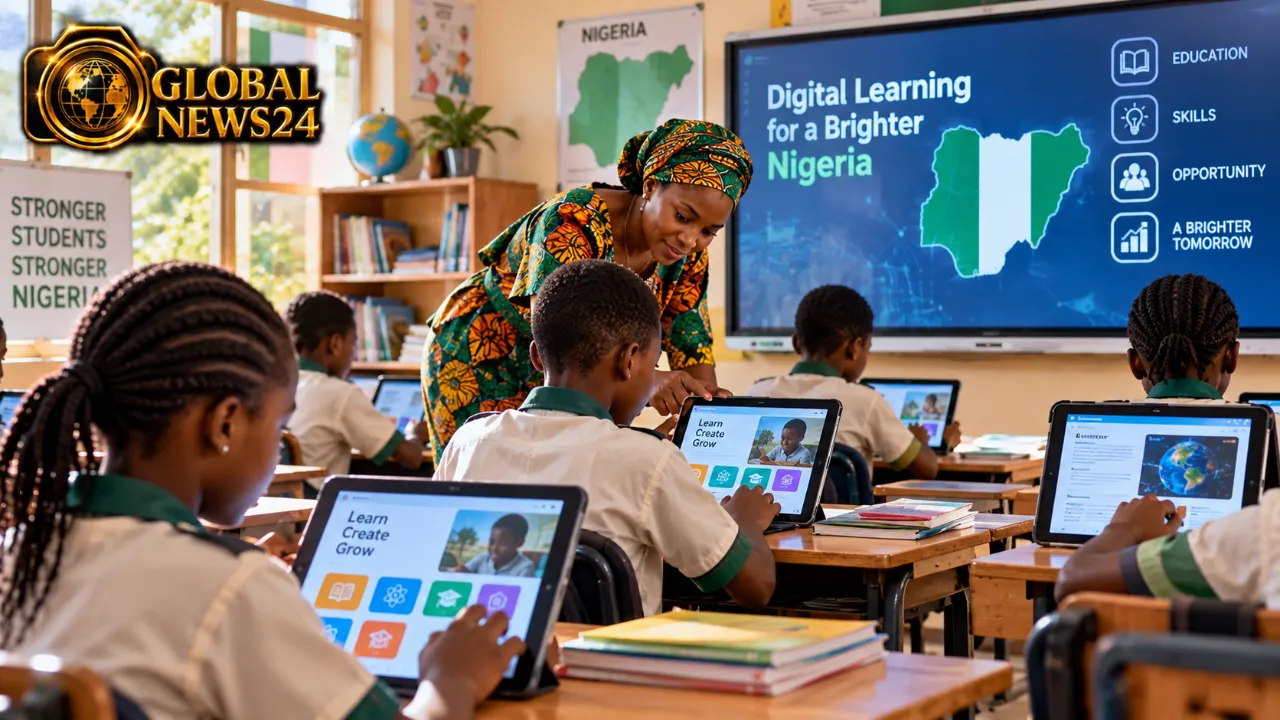
ABUJA — Nigeria’s effort to expand digital learning has reached a new milestone, with the Learning Passport programme now serving more than 2.3 million children and young people across the country, according to UNICEF.
The platform is designed to provide educational material through both online and offline systems, an important feature in communities where reliable internet connectivity remains limited.
The programme includes primary-level learning, skills development and professional-development resources for teachers.
Nigeria’s education system faces significant geographical and infrastructure challenges.
Students in remote communities may have limited access to teaching materials, devices, internet services or adequately trained teachers. Digital platforms cannot eliminate those problems on their own, but offline-capable educational technology can provide an additional route to learning.
The expansion of the Learning Passport illustrates how Nigeria is increasingly using technology to address gaps in education access.
Unlike systems that require permanent broadband connections, the programme’s online-and-offline model is intended to make educational resources usable in areas where connectivity is intermittent.
Teacher development is another important component.
Providing digital materials without supporting teachers can limit their effectiveness, particularly when new technology is introduced into classrooms for the first time. Training and professional resources are therefore being incorporated alongside student learning.
Nigeria’s large and youthful population makes education one of the country’s most important long-term development priorities.
Expanding access to digital learning could also help students develop the skills needed for an economy in which technology and digital services are becoming increasingly important.
The next challenge will be ensuring that digital education reaches communities consistently, while improving access to electricity, devices, connectivity and trained educators.
For Nigeria, digital education is increasingly becoming not simply a technology project, but part of the wider effort to make educational opportunity more accessible across one of Africa’s largest school-age populations.