
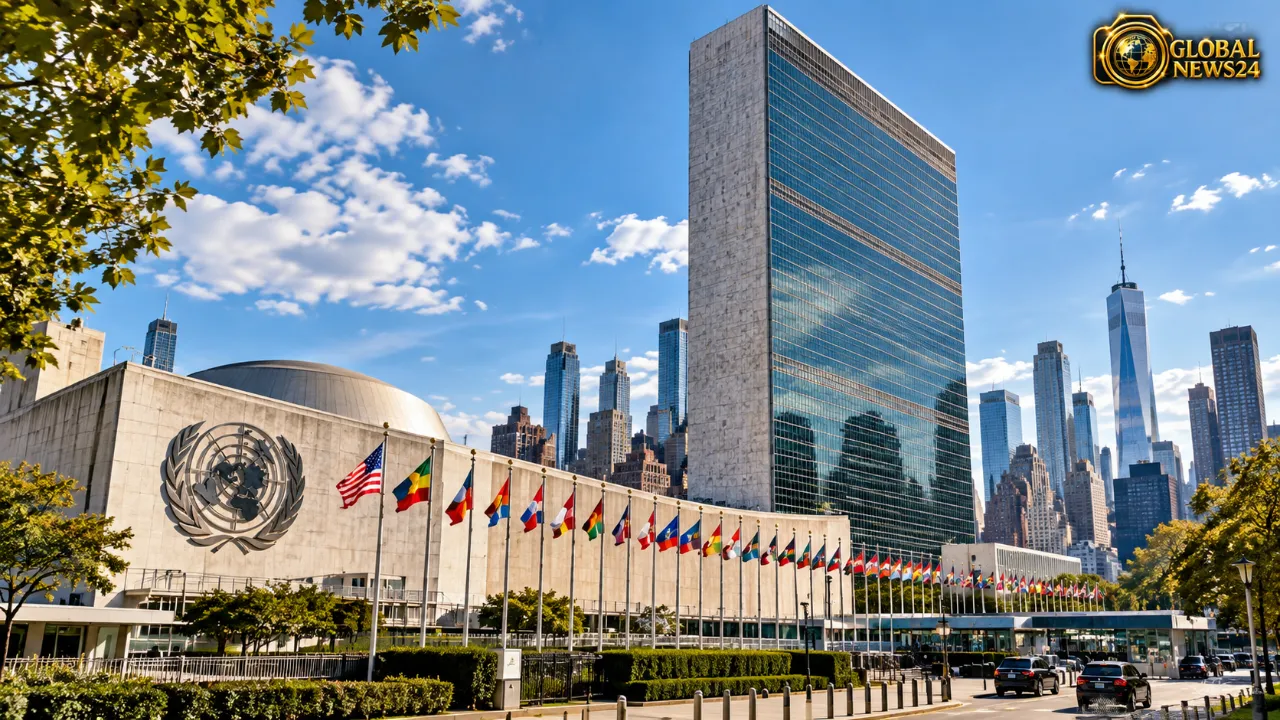
NEW YORK — The United States placed its foreign-policy priorities before the international community this week as President Donald Trump addressed the 81st session of the United Nations General Assembly in New York.
Trump delivered his remarks at UN Headquarters on September 22, presenting an agenda centered on American sovereignty, national security and what his administration describes as an “America First” approach to international affairs. The White House characterized the address as a statement of renewed American strength and a defense of U.S. interests abroad.
The appearance came at a time when Washington is managing a wide range of international challenges. The administration’s recent legislative policy statements show that relations with Iran, Russia, energy security and the deployment of U.S. military forces remain active subjects of debate between the executive branch and Congress.
Trump’s UN appearance also provided an opportunity for the administration to present its foreign-policy direction directly to governments from around the world. The United Nations General Assembly remains one of the few annual diplomatic gatherings where leaders and senior representatives from nearly every member state are present in the same city.
The administration’s emphasis on sovereignty and national interests reflects a broader shift in Washington’s approach to multilateral institutions and international agreements. Supporters of that approach argue that international cooperation should not constrain core U.S. national interests, while critics have raised concerns about the potential consequences for longstanding alliances and multilateral institutions.
Those competing interpretations are likely to remain part of the American political debate as the country moves toward the November 2026 midterm elections.
Beyond domestic politics, Washington’s decisions carry global consequences. U.S. policy on security, sanctions, trade, energy and technology continues to influence governments and businesses far beyond American borders.
For international audiences, the New York gathering therefore offered more than a ceremonial diplomatic event. It provided another indication of how the United States intends to define its role in a rapidly changing international order.