
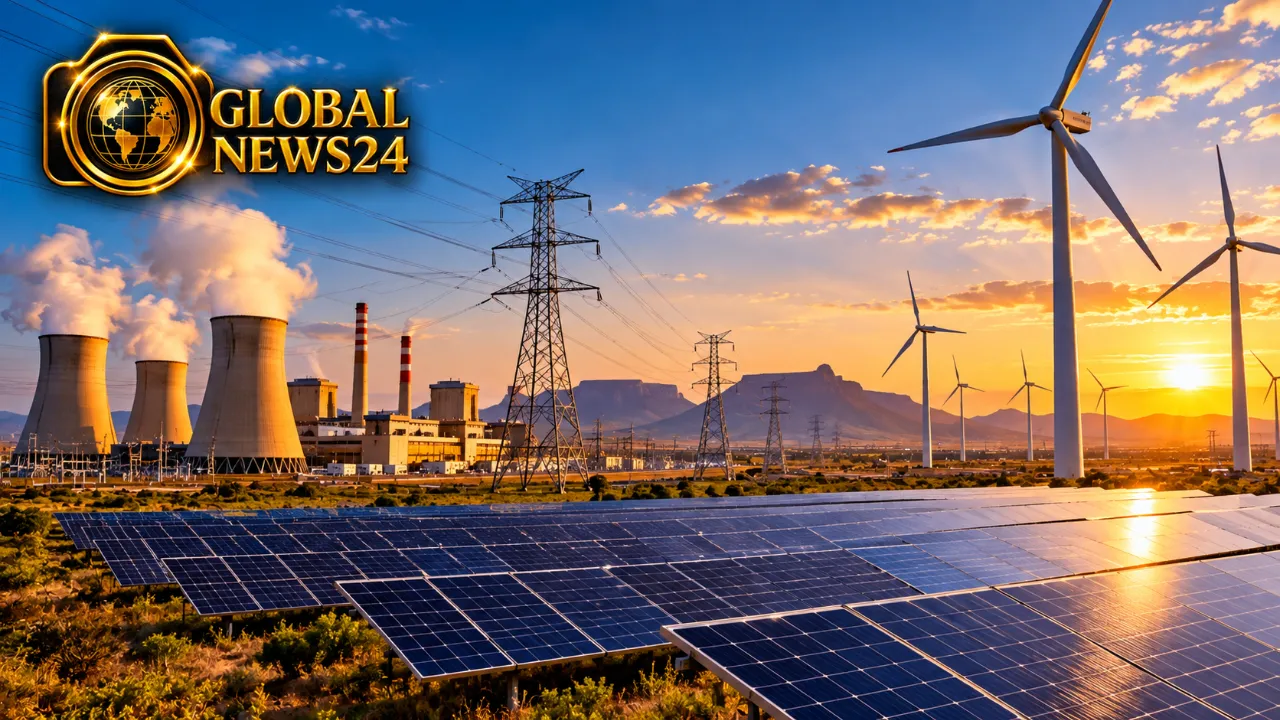
JOHANNESBURG — South Africa’s electricity system is showing sustained signs of recovery after years in which power shortages and scheduled outages constrained businesses, households and economic growth.
State-owned electricity utility Eskom said South Africa completed the 2026 winter period with electricity demand fully met throughout the season.
As of early September, the country had recorded 476 consecutive days without load shedding since 16 May 2025, according to Eskom.
The utility reported that its financial year-to-date Energy Availability Factor reached 67.79%, compared with 61.3% during the corresponding period a year earlier. Eskom described this as its highest year-to-date level in six years.
Approximately 6,213 MW of generating capacity has effectively been restored compared with conditions three years earlier, while average unplanned outages have also fallen substantially.
Another important change has been the reduced use of diesel-fired open-cycle gas turbines, traditionally deployed when the electricity system comes under pressure. Eskom reported significantly lower diesel-powered generation during the current financial year.
The improvement does not eliminate South Africa’s longer-term energy challenges. Transmission investment remains crucial as new renewable and private generation projects seek access to the national grid.
Government plans also envisage the development of a competitive wholesale electricity market and the expansion of grid capacity.
Reliable electricity is particularly important for mining, manufacturing, digital infrastructure and other energy-intensive industries.
After years in which electricity shortages became one of South Africa’s most significant economic constraints, sustained grid stability could provide a stronger foundation for investment and industrial activity.