
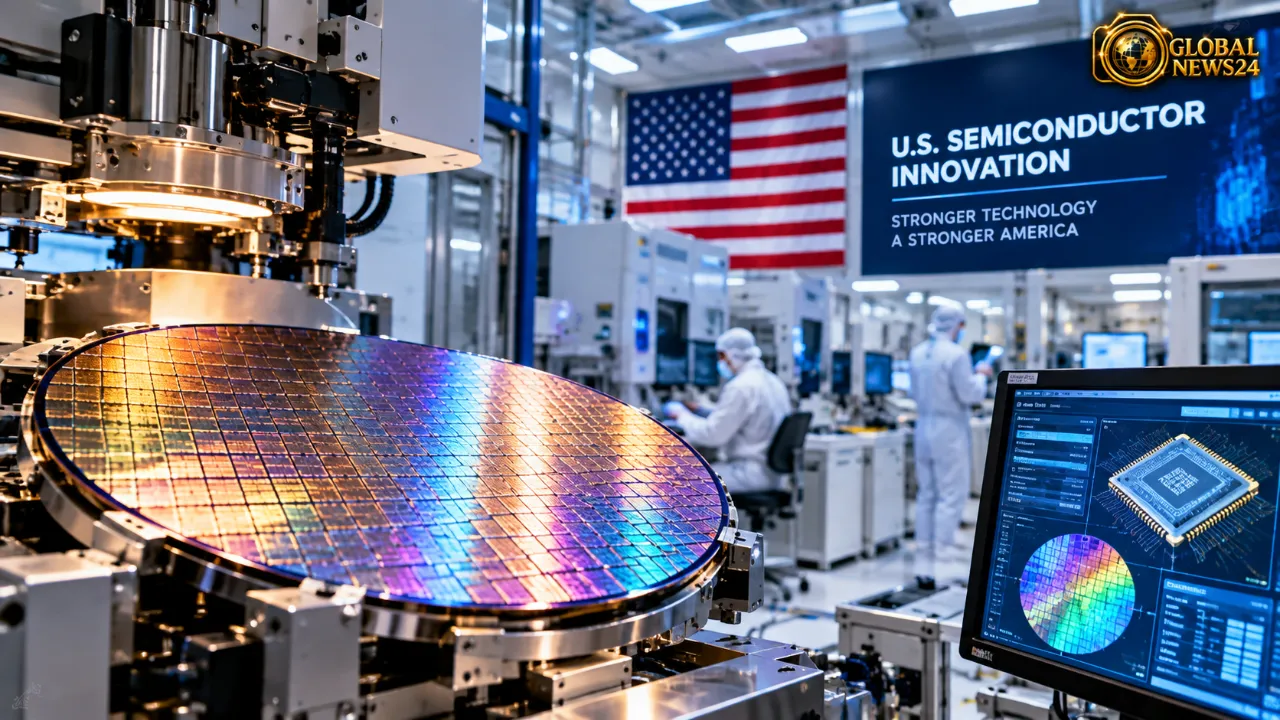
WASHINGTON — The United States is expanding investment in advanced semiconductor research as competition accelerates over the technologies expected to shape the next generation of computing.
The U.S. Department of Commerce announced on September 16 that it had finalized an R&D award of up to $1 billion for Anderon, a newly formed subsidiary of IBM, under the CHIPS and Science Act.
According to the National Institute of Standards and Technology, the funding is intended to advance semiconductor research and development and accelerate efforts to establish a new quantum semiconductor foundry in the United States.
The announcement highlights the growing strategic importance of semiconductors. Chips are fundamental components in smartphones, vehicles, telecommunications networks, defense systems, artificial-intelligence infrastructure and scientific computing.
Quantum technology represents an even more specialized frontier. Unlike conventional computers, quantum systems seek to use quantum-mechanical properties to perform certain types of calculations that may be difficult or impractical for traditional machines.
Significant scientific and engineering challenges remain before quantum computing can be deployed broadly. Nevertheless, governments and technology companies around the world are investing heavily in research because of its potential applications in materials science, chemistry, optimization, communications and other fields.
The Commerce Department said the Anderon award is intended to strengthen the domestic semiconductor supply chain as well as U.S. national security.
The initiative also reflects a wider industrial trend in which semiconductor manufacturing is increasingly viewed not simply as a commercial sector but as strategic infrastructure.
Recent disruptions to global supply chains demonstrated how shortages of relatively small electronic components can affect automotive production, consumer electronics and other major industries. At the same time, the rapid expansion of artificial intelligence has increased demand for advanced computing hardware and the data centers needed to operate it.
As a result, semiconductor research, energy infrastructure, AI computing and quantum technology are becoming increasingly interconnected parts of American industrial policy.
The long-term impact of individual research projects will depend on whether experimental technologies can move successfully from laboratories into commercially viable manufacturing.
For now, the scale of the new federal award demonstrates that advanced semiconductor research remains an important component of the United States’ technology strategy.