
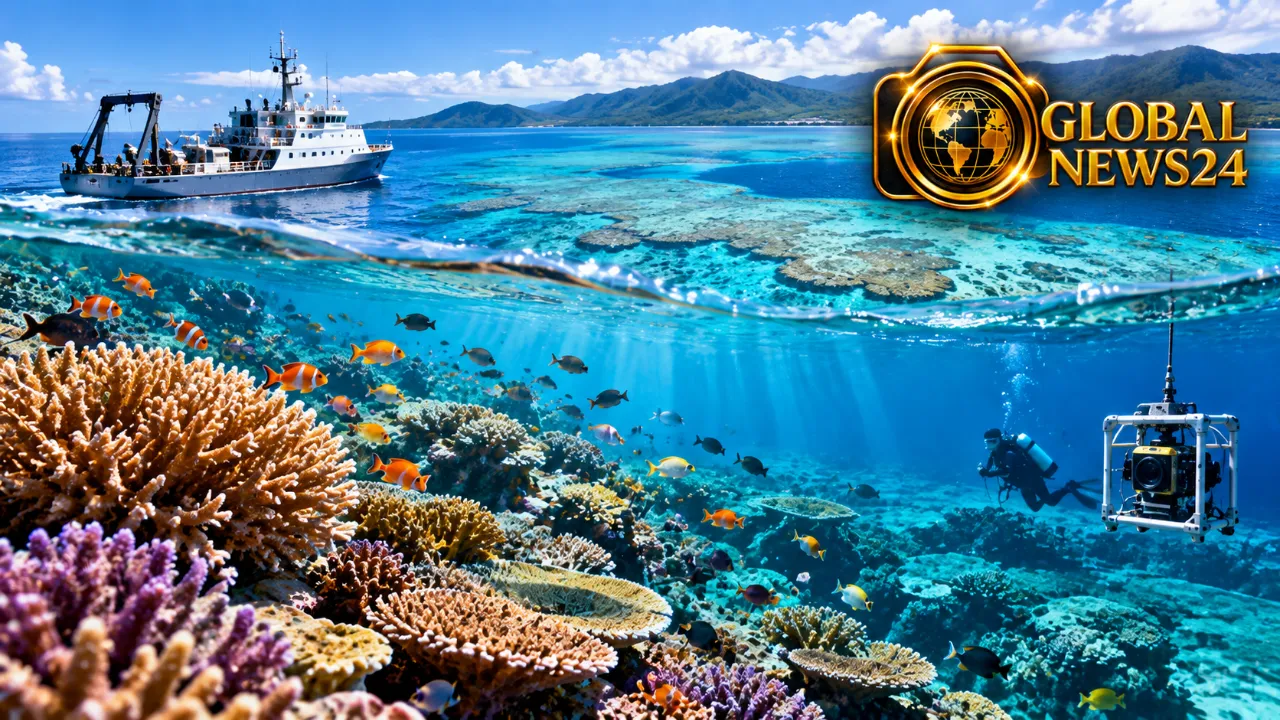
QUEENSLAND — Australia’s Great Barrier Reef has shown early signs of recovery following recent bleaching, although scientists continue to warn that the world’s largest coral reef system remains exposed to long-term environmental pressures.
The Australian Institute of Marine Science released its 2025–26 annual reef condition report after scientists surveyed 121 reefs between August 2025 and June 2026.
According to AIMS, hard coral cover increased slightly or remained similar to 2025 levels across the reef’s three major regions, signalling the beginning of recovery from the 2024 mass bleaching event.
Average hard coral cover reached 35.1% in the northern region and 31.6% in the central region, while the southern region recorded 26.4%.
Among the 121 reefs surveyed, 28% recorded an increase in coral cover, 56% showed no net change and 16% experienced a decline.
Scientists also reported generally low bleaching prevalence during the monitoring period, while outbreaks of crown-of-thorns starfish were mostly absent or at low levels.
The findings provide a cautiously positive snapshot of reef conditions, but recovery does not remove the broader threat posed by marine heatwaves and climate change.
Coral reefs can recover when environmental conditions are favourable, but repeated bleaching events can reduce the time available for damaged ecosystems to regenerate.
The Great Barrier Reef stretches for more than 2,000 kilometres along Australia’s north-eastern coast and has enormous environmental, cultural and economic significance.
Its condition is closely monitored internationally, making the reef one of the world’s most visible indicators of the effects of warming oceans.
The latest results demonstrate the reef’s capacity for recovery while also underlining the importance of long-term scientific monitoring and global efforts to address climate-related pressures.