
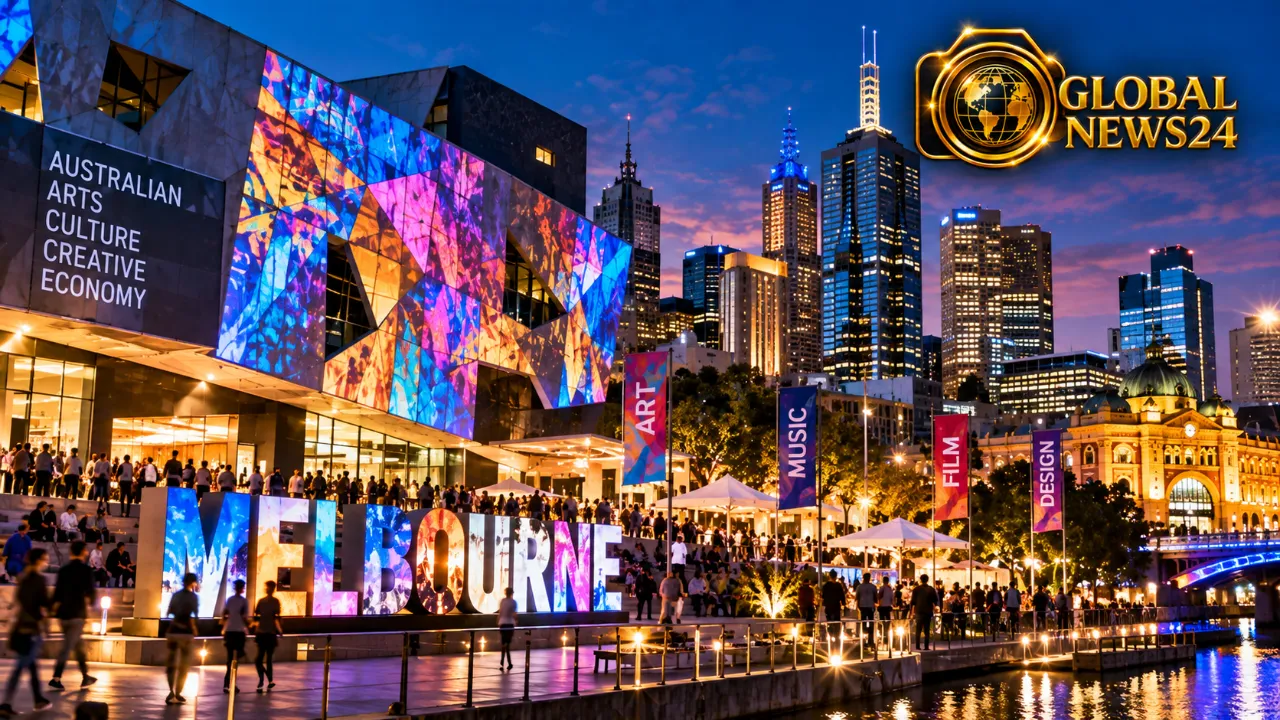
MELBOURNE — Australia’s cultural and creative industries are playing an increasingly significant role in the national economy, with new figures showing cultural and creative activity contributed $70.3 billion in 2024–25.
The Australian Government’s Office for the Arts highlighted the figures in September 2026 as part of its assessment of the country’s cultural and creative activity.
The sector extends well beyond traditional performing and visual arts. It includes areas such as design, architecture, publishing, screen production, music and other creative services that interact with Australia’s wider digital and service economy.
Australia’s cultural sector also has an important international dimension.
Australian artists, performers, writers, filmmakers and creative organisations regularly participate in international festivals, exhibitions and collaborative projects, helping connect the country with audiences across Asia, Europe, the Americas and other regions.
At home, major cities including Sydney, Melbourne, Brisbane, Adelaide and Perth have developed extensive cultural ecosystems involving museums, galleries, theatres, festivals, film production and digital creative industries.
Regional Australia is also an important part of the country’s cultural landscape.
Digital technologies are meanwhile changing how cultural content is produced and distributed. Immersive installations, digital exhibitions, streaming services and interactive media are creating new connections between arts, technology and tourism.
The latest economic figures reinforce the importance of culture not only as a social and artistic asset but also as a substantial component of Australia’s modern economy.
As international competition for creative talent and cultural audiences increases, the relationship between arts policy, technology, tourism and the creative economy is likely to become an increasingly important part of Australia’s national development strategy.