
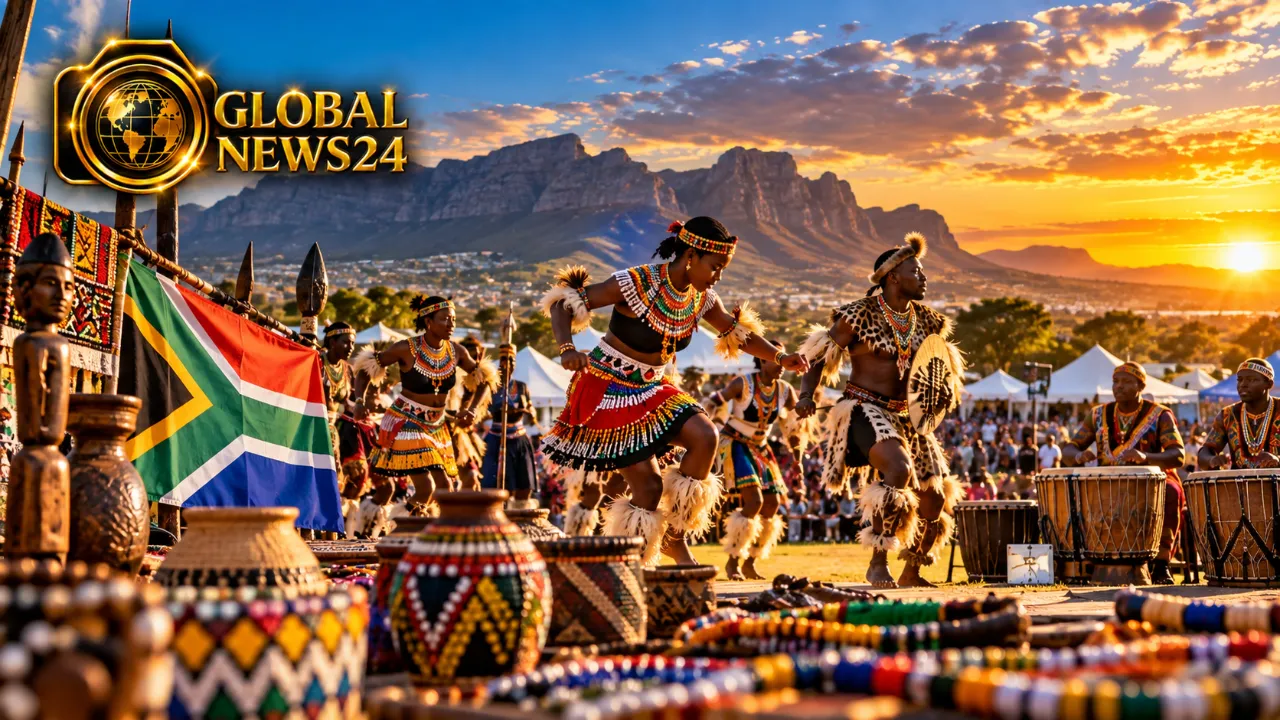
OUDTSHOORN — South Africans marked National Heritage Day on 24 September with celebrations focused on the country’s cultural diversity, living traditions and shared national identity.
The national programme was held at Bongolethu Sport Stadium in Oudtshoorn in the Western Cape under the theme “Celebrating Our Living Heritage: Strengthening the Ties That Bind Us.”
Heritage Day is observed annually as a public holiday and provides communities across South Africa with an opportunity to recognise the cultural traditions, languages and histories that form part of the country’s identity.
The concept of living heritage extends beyond monuments and museum collections. It includes oral histories, cultural traditions, rituals, performance, indigenous knowledge, community memory, skills and relationships passed between generations.
The 2026 programme also highlighted the role of communities and cultural practitioners in preserving Indigenous Knowledge Systems and transferring cultural knowledge to younger generations.
South Africa’s heritage reflects extraordinary diversity. The country recognises multiple official languages and encompasses cultural traditions shaped by African communities, Khoi and San heritage, as well as histories influenced by migration, colonialism, apartheid and the democratic transition.
Heritage institutions therefore face a dual responsibility: preserving historical memory while ensuring that previously marginalised communities and traditions are adequately represented.
Cultural heritage also intersects with the creative economy through music, film, publishing, fashion, crafts, cuisine and tourism.
For South Africa, Heritage Day serves not only as a celebration of the past but also as an ongoing discussion about how cultural diversity can contribute to social cohesion and future development.